Sump Pump Installation in Milwaukee Basements, New or Replacement
Sump pump installation in Milwaukee is often a first, not a replacement. Many older houses never had a pit because their foundation drains ran to the sewer. Adding one means cutting the floor, tying in the drain tile and running a discharge line outside.
HomeGuide (2023) prices a sump pump at $600–$2,500 installed, $400–$700 to replace, and $2,500–$5,000 when a concrete floor has to be cut for a new pit. Wisconsin's plumbing code sets a sump at least 16 inches across at the top and 22 inches deep.
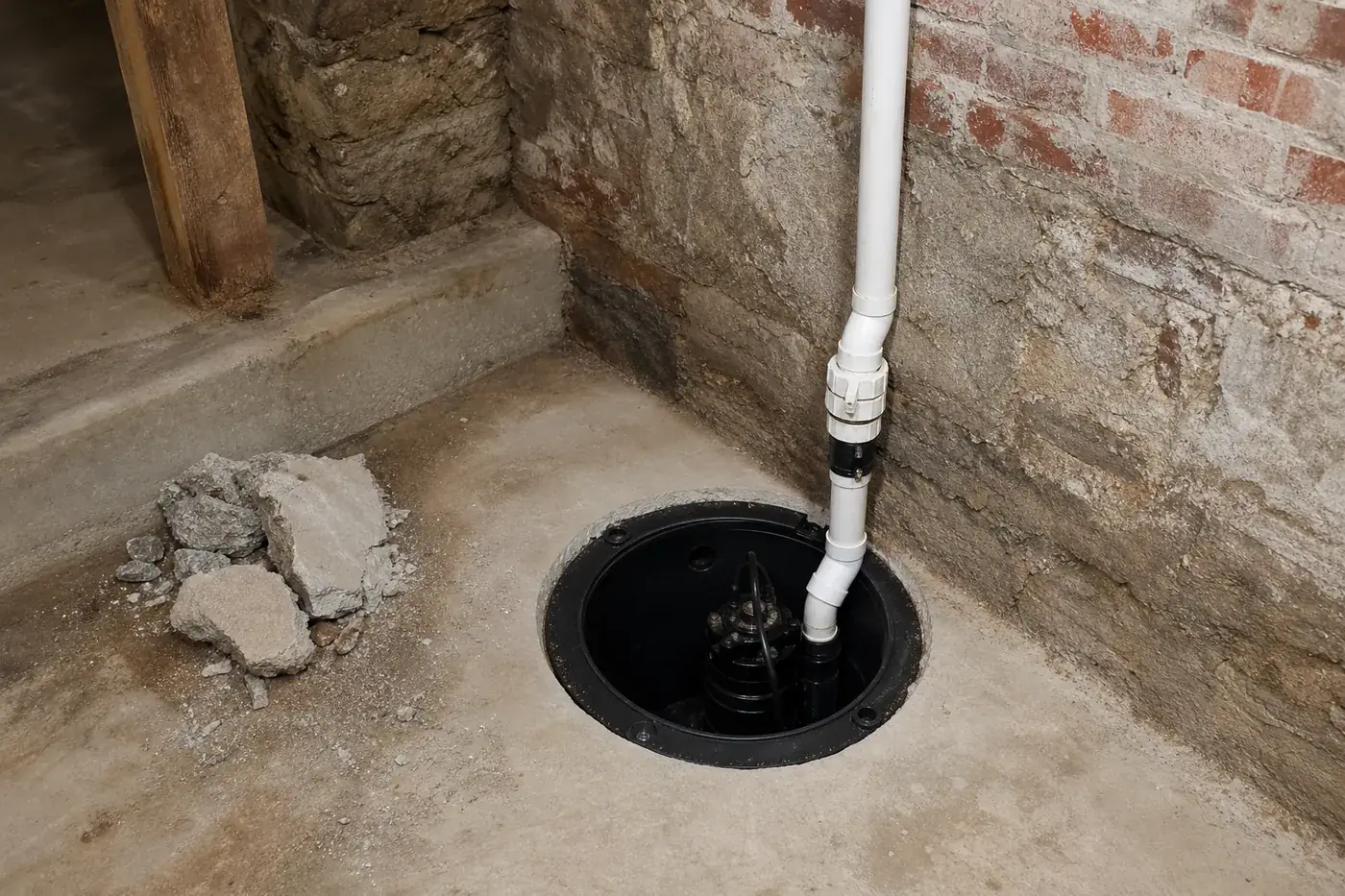
When does a Milwaukee basement need a sump pump?
- Water collects at the floor edge after storms or the spring melt, and an interior drain tile is planned.
- The house is old enough that its foundation drains may run to the sanitary sewer; the city's public works department says many built before 1954 were connected that way.
- An existing pump runs often, is noisy, or is near the end of its life.
- A lower flat or finished basement would be costly to dry out after one failure.
A sump does not stop sewage coming up a floor drain; that is a lateral or backwater problem.
What Wisconsin code says about a sump
Wisconsin's plumbing code, reprinted in the dwelling code at SPS 321.17, sets the basics. Unless the pump maker recommends otherwise, a sump must be at least 16 inches in diameter at the top, 14 at the bottom and 22 inches deep. An interior sump needs a rim at least an inch above the floor and a removable cover strong enough for the load. Drain tile has to slope toward the pit, and the pit discharges to grade or through a pump. Where a pump discharges into a storm drain system, a check valve is required.
Sump pump installation choices
- Submersible or pedestal: HomeGuide (2023) prices submersible units at $100–$800 and pedestal units at $100–$400 before labor. Submersibles are quieter and sit under a sealed lid.
- A backup pump: a second pump on a battery takes over when the main pump or the power fails. HomeGuide (2023) lists battery-powered pumps at $150–$800 for the unit, and the batteries need replacing every few years.
- The discharge line: where the water goes matters as much as the pump. It should end well away from the foundation and from neighbors, or connect to a storm lateral where one exists, never to a floor drain or laundry tub. Freeze-resistant outlets help in winter.
Before the pit is cut
Ask whether the job needs a plumbing permit; the city's checklist says plumbing work in a house does. Ask where the existing drain tile runs and whether it will be disconnected from the sewer as part of the job. Ask for the pump model and capacity in writing, as Wisconsin's home improvement rule expects a contract to name principal products. Compare prices on the Milwaukee foundation repair cost page.
Questions homeowners ask
How often should I test a sump pump?
A few times a year, and before spring. Pour a bucket of water into the pit and watch the float lift, the pump start and the water drop, then check outside that water leaves the discharge line. Listen for grinding or a pump that runs after the pit is empty. Test the battery backup the same way, with the main pump unplugged.
Sources
- Wisconsin Administrative Code SPS 321.17: Drain tiles (with SPS 382.36 sump rules)
- Wisconsin Administrative Code SPS 382.36: Stormwater and clearwater plumbing
- City of Milwaukee Department of Public Works: Private Property Infiltration and Inflow Reduction
- City of Milwaukee Department of Neighborhood Services: Does it need a permit?
Tell us what the basement is doing
A crack you have been watching, water after a storm, a stoop leaning away from the house: a sentence or two is enough. It goes to one independent foundation and waterproofing specialist who works in Milwaukee.