Foundation Warning Signs: What Each One Usually Means, and How Soon to Act
Foundation warning signs in a Milwaukee house are easier to judge once you know what usually causes each one. Below, each sign gets a short answer first, then a note on how soon to act and the page that covers the fix.
A sideways crack in a block wall usually means soil pressure; a leaking vertical crack in a poured wall, a shrinkage crack letting water in; water up the floor drain, a sewer problem. In HomeGuide's 2025 guide, walls bowed 2 inches or more need tiebacks or straightening.
What does a long horizontal crack in a block wall mean?
Pressure from the ground outside, usually saturated clay that also freezes near the top of the wall. Act soon if the wall leans out of plumb, the crack has widened since you last measured, or blocks have shifted. Measure and date it today. See bowed basement walls.
Is a thin vertical crack in a poured wall serious?
Usually not structurally. Poured walls shrink as they cure and often crack straight up and down. The concern is water: a crack that leaks after rain can be injected for $250–$800 (HomeGuide, 2026). Watch for a crack wider at the top than the bottom, or one with offset faces, which suggests movement.
Why is water seeping in where the wall meets the floor?
Groundwater is building up against the foundation and finding the cove joint, the weakest seam in a basement. In clay, water drains away slowly, and old clay-tile drains may be blocked. Check downspouts and grading first. If it returns after every storm, an interior drain and sump is the usual fix; see basement waterproofing.
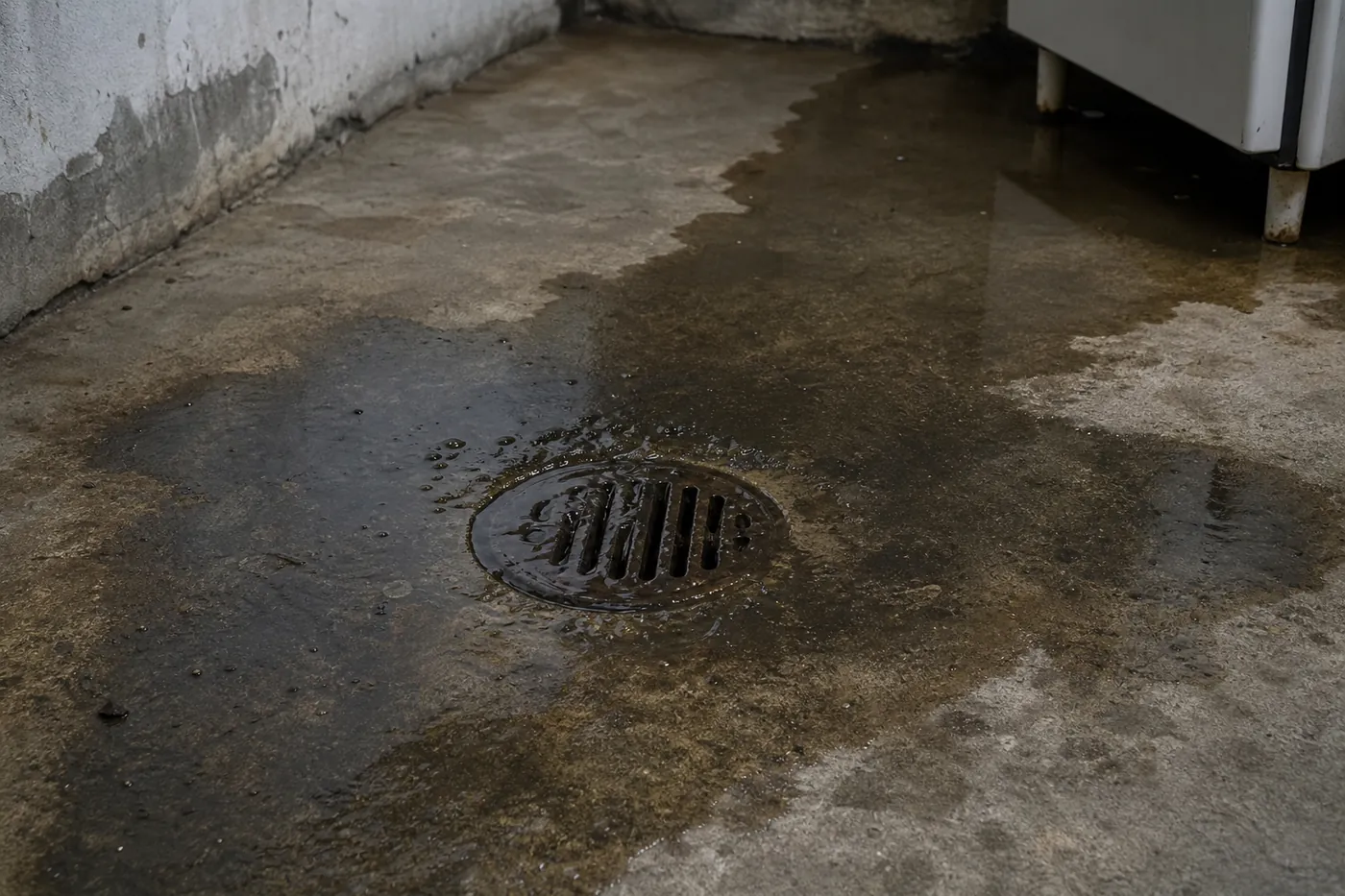
Water came up through the floor drain. Is that the foundation?
Almost never. Water rising from a floor drain, especially if it is gray or smells, is a backup in the sewer lateral or the city main. The City of Milwaukee puts upkeep of the house lateral on the property owner, up to where it joins the city main. A plumber with a camera can find a root or a break; a backwater valve is a separate fix.
Why are there stair-step cracks near one corner?
That corner is probably settling, often because roof water pours out beside it or the ground below is soft or filled. Mark the crack ends with a date. If the cracks grow, or doors and windows nearby start to bind, piers are the usual repair; see settling corners and stoops.
Why is the front stoop pulling away from the house?
The stoop was likely poured on a shallow footing or loose fill, and frost or settling is moving it while the house stays put. Wisconsin's code now sets stoop footings at least 48 inches below grade. Seal the gap so water cannot run down to the wall, then decide whether to lift or rebuild the stoop.
What is the white, powdery crust on my basement wall?
Efflorescence: minerals left behind as water moves through masonry and evaporates. It is not damage in itself, but it shows where water is getting in. Brush it off, note where it returns, and look outside at that spot for a downspout, low grading or a tipped stoop.
Why does the sump pump run in dry weather?
High groundwater is one reason, common near rivers and on low lots. Others are a missing or failed check valve that lets the discharge water fall back into the pit, a float set too low, or a discharge line that drains back. Have the system checked before it wears out the pump; see sump pump installation.
Tell us what the basement is doing
A crack you have been watching, water after a storm, a stoop leaning away from the house: a sentence or two is enough. It goes to one independent foundation and waterproofing specialist who works in Milwaukee.